
INGROWN TOENAILS KANSAS CITY OVERLAND PARK
Don’t suffer with Ingrown Toenails
Same day appointments available
about Ingrown Toenails
Overview
Ingrown toenails are very common. They are generally heredity and can also be caused by incorrect cutting of the nail itself. It’s a very
painful condition that occurs when the nail grows into the skin as this occur’s the skin around the nail become’s red and swollen, this cause’s the problem to get worse.In 37 years in practice we have treated thousand’s successfully.
In 37 years in practice we have treated thousand’s successfully.
Home ingrown toenail treatment should start with soaking the foot in Epsom salts for 20 minutes, this will hopefully reduce the swelling and reduce any discharge from the toe. Apply OTC topical antibiotic ointment is also recommended.You can stick a small piece of cotton under the nail edge to lift the nail so it can grow over the skin.If you’re not seeing improvement with the first 3 to 5 days or it is getting worse, you need to call us.
Check the Results
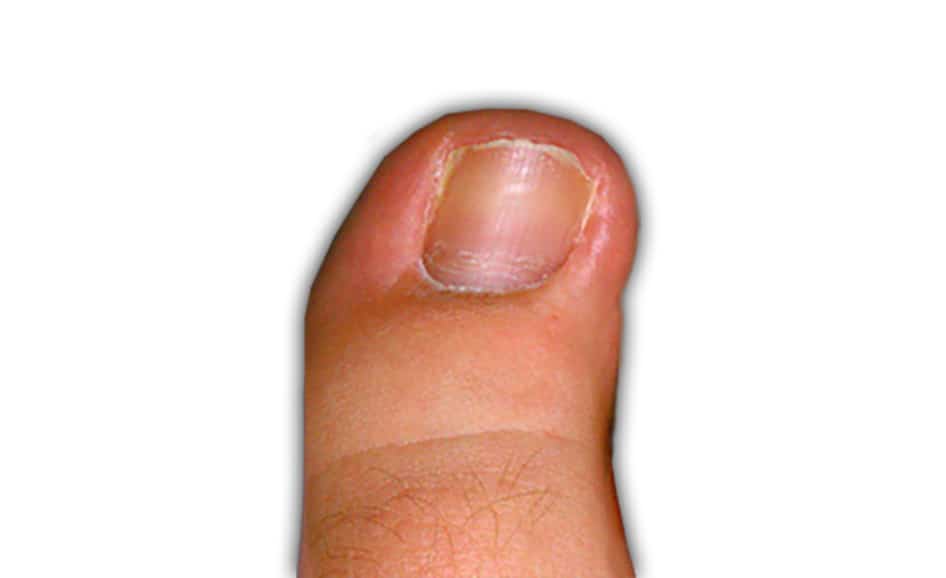
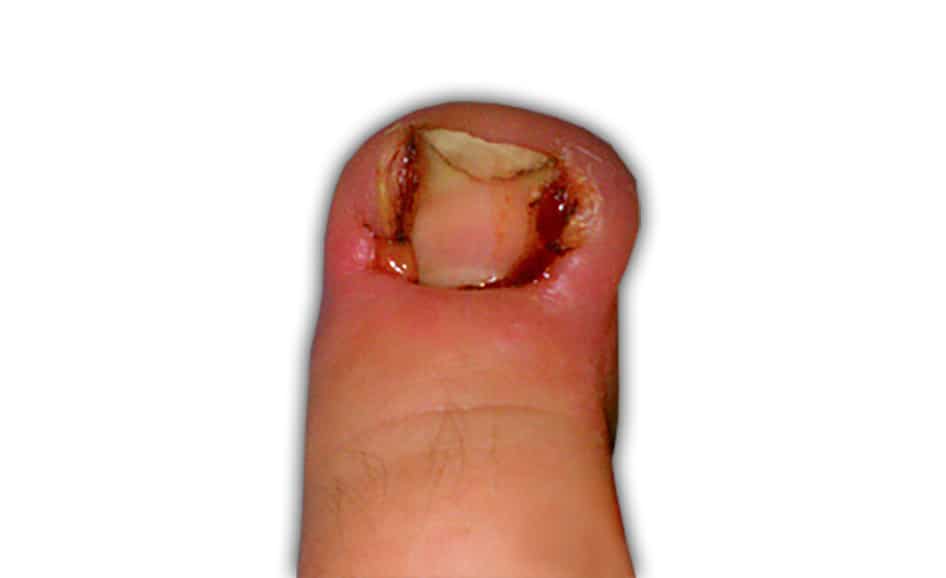
Before & After

about Ingrown Toenails
Causes
Ingrown toenails can develop for many reasons. In some cases, the toenails are simply too long. Trauma, such as stubbing a toe, shoes that cause pressure or having someone step on it can cause the nail to jam into the skin. Incorrect cutting and also cause them.
Many times they are a hereditary condition because of the shape of the toes or nails. Patients with diabetes and poor circulation need to be especially careful because it can become infected along the side of the nail and the nail bed area.
about Ingrown Toenails
Symptoms
Ingrown nails should be treated as soon as possible. This is really important if you have diabetes or poor circulation because it can become severe quickly. If the skin is red, painful, or swollen on the sides of the nail, there may be an infection. The ingrown nail can produce a bacteria-rich environment that can cause an infection.
Our Treatment
Our Treatment or Self-Treatment
The patient can self-treat with mild antiseptic solution to the area and soaking in antibacterial soap with some water. If this doesn’t improve it within 3 to 5 day’s then see a podiatrist.
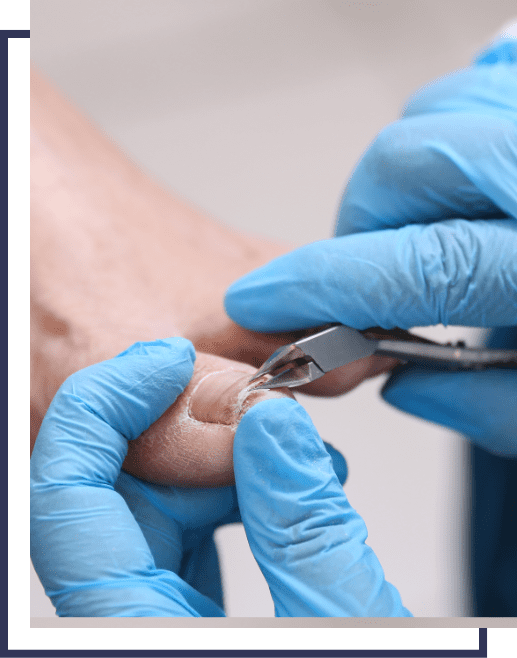
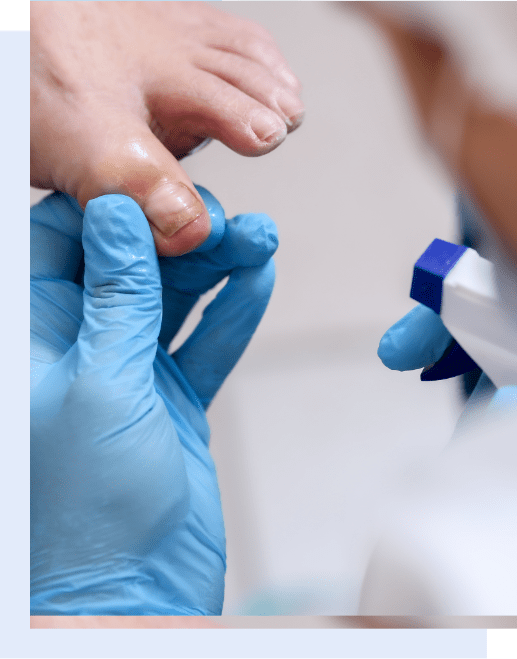
If you have to see us for treatment we first numb the toe before we treat it, we use a cold spray to numb the skin a the base of the toe before the numbing. This type of numbing is a way to reduce discomfort and get the toe numb, I will always check to make sure it is numb before doing anything. If the problem has never occurred before then trimming out the ingrown nail should solve the problem. If the nail is a recurrent problem then permanent excision of a small portion of the nail with a chemical solution can be done; it heals over 7 to 10 days. The way this is done only a 1/16 inch of nail is removed, so the nail still look’s normal size. Normally no time off from work is necessary.
Have any Questions?
Ingrown Toenails
Treatment FAQs
What is an ingrown nail?
An ingrown nail occurs when the edge of a big toenail grows into the surrounding skin instead of over it. This can lead to pain, inflammation, and even infection. Make sure you always cut your nails straight across to help reduce chances of a ingrown nail.
What causes ingrown nails?
Ingrown nails can be caused by various factors, including improper nail trimming you need cut the nail across and not into the corners, tight-fitting shoes, hereditary factors I my practice I have seen generations of family members come in with ingrown nails and also damage and , injury to the nail, or underlying nail conditions.
What are the symptoms of an ingrown nail?
Symptoms may include pain, tenderness, redness, swelling, and sometimes the presence of pus. In severe cases, it can lead to infection. It’s very important to treat any infection if the patient has diabetes or limited blood supply to foot.
How can I prevent ingrown nails?
To prevent ingrown nails, you must trim your nails straight across rather than in cutting into the corners of the nail.
How can I treat an ingrown nail at home?
Soaking you’re the foot in warm, soapy water, gently lift the ingrown edge of the nail using a clean, sterilized tool, and keep the area clean and dry. Using OTC antibiotics can reduce the infection also.
When should I see a doctor for an ingrown nail?
If the ingrown nail is causing severe pain, infection, or if you have underlying health conditions like diabetes, it’s best to see a podiatrist for proper treatment. Especially if the toe is red at the base or there are streaks of red in your foot.
What are the medical treatments for ingrown nails?
Same day treatments to relieve the pain and infection with partial nail removal, antibiotics for infection, or, in severe cases, surgical removal of the ingrown nail and nail bed. The toe is always numbed at the base so you have no pain.
Ingrown Toenails
Blog
Athletes and Ingrown Toenails
Bob was a spirited 13-year-old with a passion for sports, especially soccer. He spent most of his free time on the soccer field, practicing his dribbling skills and perfecting his shots on goal. However, there was one thing that had been bothering Bob for quite some time – a pesky ingrown toenail. Dr. Bembynista reviewed treatments with his parents.
This ingrown nail had become a constant source of pain and discomfort for Bob. He had tried various home treatments, like soaking his foot in warm water and using over-the-counter ointments, but nothing seemed to provide lasting relief. Every step he took, every sprint across the field, sent sharp pains shooting through his big toe.
One day, after a particularly painful soccer practice, Bob decided it was time to seek professional help. He had heard about a podiatrist in town, Dr. Bembynista, who was known for his expertise in treating foot and nail problems.
Dr. Bembynista was a friendly and experienced doctor who had seen countless cases of ingrown toenails over the years. He understood Bob’s predicament and immediately set to work, carefully examining the troublesome toenail. After a thorough evaluation, Dr. Bembynista explained the problem to Bob and his parents for consent to treat him and assured him that they could correct it so that it would never hurt again.
Bob felt a sense of relief knowing that he was in good hands. Dr. Bembynista performed a minor procedure to remove the ingrown portion of the toenail, taking care to ensure that Bob was comfortable throughout the process. He explained the importance of proper nail care and gave Bob some tips on preventing ingrown nails in the future.
As Bob left Dr. Bembynista’s clinic that day, he could already feel the difference. The constant pain that had plagued him for so long was gone, replaced by a sense of relief and gratitude. He couldn’t wait to return to the soccer field, pain-free, and give his best performance.
In the weeks that followed, Bob followed Dr. Bembynista’s advice diligently. He kept his toenails trimmed properly and wore comfortable shoes that didn’t put pressure on his toes. Slowly but surely, he regained his confidence on the soccer field and started scoring goals like never before.

You can trust us
Testimonials



Nail Fungus
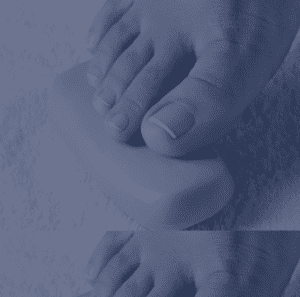
Nail Fungus 89% successfully treated with Cold laser. Successful treatment of Nail Fungus for 10 years. Oral medication can cause liver damage.
Learn More
Heel Pain
Pain in the heel when you first get up in the morning or after sitting for a period of time. Conservative care works 98% of the time.
Learn More
Plantar Fasciitis
Plantar fasciitis is one of the most common problem’s we see, successful conservative treatment occur’s in over 98% of the cases.
Learn More
3D Custom Orthotics
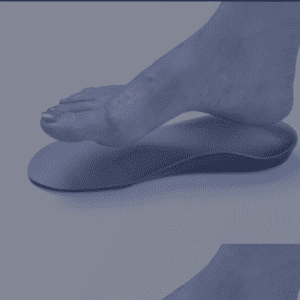
Cutting edge 3-D Custom-made orthotic are used to treat heel pain, plantar fasciitis, ball of foot pain, ankle type pain and lower leg , knee pain and lower back pain by controlling abnormal foot function. Quick 7 day turn around.
Learn More
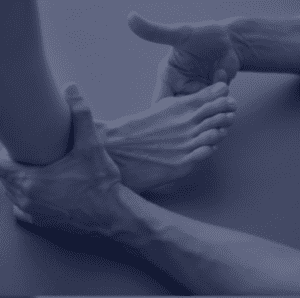
Bunions
A bunion is an enlargement of bone at the base of the big toe. It can occur on one or both feet. The big toe becomes deviated towards the second toe—this is called “Hallux Valgus.”
Learn More
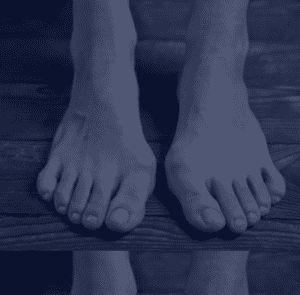
Lapiplasty®
Lapiplasty 3D bunion surgery is a recently developed type of surgery for the most severe of all bunion deformities.
Learn More
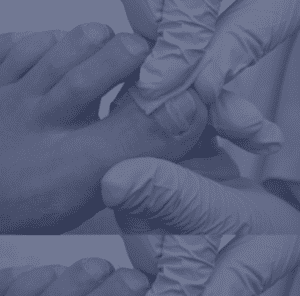
Ingrown Toenails
Ingrown toenails are very common. They are generally heredity and can also be caused by incorrect cutting of the nail itself.
Learn More
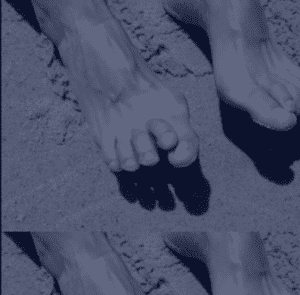
Hammertoes
Hammer toes crooked and painful in shoes. Corns are on top or side of toe.
Learn More
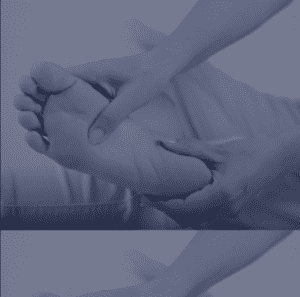
Morton’s Neuroma
Morton’s Neuroma is an enlarged nerve that usually occurs between the third and fourth toes, but a neuroma can also occur between the second and third toes.
Learn More

Corns & Calluses
Corns and calluses are thick, hardened layers of skin that develop when your skin tries to protect itself against friction and pressure. The pain you have is normally causes by a bone enlargement under the skin which is really causing the pain.
Learn More
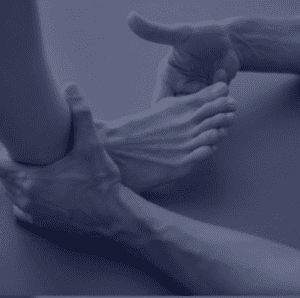
Tailor’s Bunion
A Tailor’s Bunion is a painful enlargement of the bone on the outside edge of the foot, behind the small toe.
Learn More
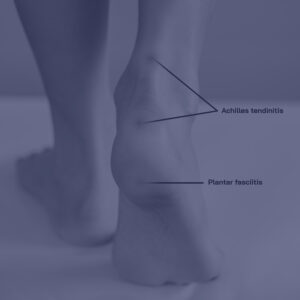
Regenerative Medicine
CLARIX FLO is an injectable regenerative therapy derived from human umbilical cord and amniotic membrane tissues from donated full term Cesarean birth. Commonly used to treat conditions like Achilles tendonitis, tibialis posterior tendonitis and plantar fasciitis.
Learn More
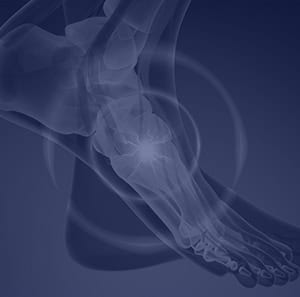
Pain on Top of Foot
Pain on top or side of foot can be treated very successfully. Some causes are bone spurs and tendonitis.
Learn More
Weak Ankles
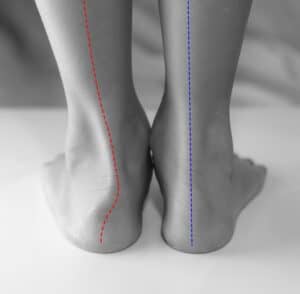
Weak ankles can be treated with 3-D Custom Orthotics, stopping pain.
Learn More
Minimally Invasive Surgery
Minimally invasive surgery (MIS) allows podiatrists to treat foot and ankle conditions using tiny incisions, resulting in less pain, faster recovery, and minimal scarring. Often done in the office it saves significant cost.
Learn More